Legal Frameworks for Child Protection: A Global Overview
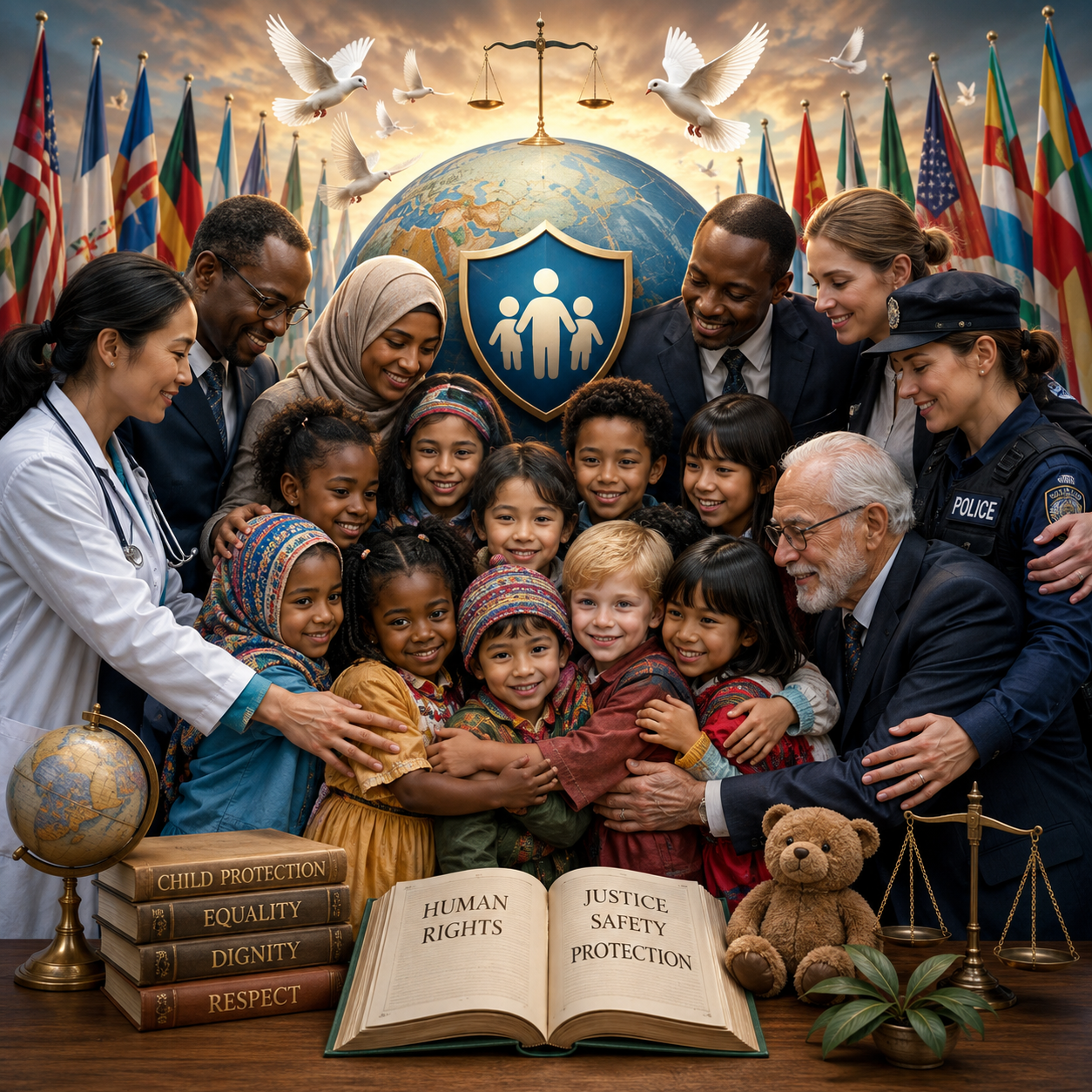
Legal frameworks for child protection bring together laws, policies, institutions, and procedures that prevent harm and uphold every child’s rights. Across countries, these systems address child abuse and neglect, exploitation, trafficking, family violence, unsafe care, and children’s contact with the justice system.
The details differ by jurisdiction, but effective systems share a common foundation: children should be safe, heard, treated with dignity, and supported within families and communities whenever that can be done safely. International human rights law provides the framework; national child-protection legislation turns those principles into duties, services, and remedies.
What Is a Child-Protection Legal Framework?
A child-protection legal framework is the combined system of laws, regulations, institutions, and procedures used to prevent and respond to risks affecting children. It defines children’s rights, assigns responsibilities to public authorities, and establishes ways to report harm and obtain protection.
A framework usually includes several connected layers:
- Primary legislation defining offences, protective duties, children’s rights, and available remedies.
- Regulations and standards governing schools, health services, residential facilities, foster care, adoption, and professional conduct.
- Public institutions such as child-protection agencies, courts, police, prosecutors, ombudspersons, and social services.
- Operational procedures for reporting, referral, risk assessment, investigation, case management, emergency action, and review.
- Prevention and support measures, including parenting assistance, health care, education, income support, and community safeguarding.
Law alone cannot keep children safe. A criminal code may prohibit abuse, yet protection will remain weak if children cannot report safely, social workers lack resources, or agencies fail to share information lawfully. Child safeguarding therefore connects legal rules with everyday practice in organizations and communities.
International Standards and the Rights of the Child
The United Nations Convention on the Rights of the Child (UNCRC) is the central international treaty on children’s rights, requiring states to respect, protect, and fulfil children’s civil, political, economic, social, and cultural rights. It guides national laws through principles of non-discrimination, survival and development, participation, and the best interests of the child.
The UNCRC applies to every person under 18, subject to the treaty’s legal framework, and treats children as rights-holders rather than merely recipients of adult care. Its principles influence laws on birth registration, education, health, family life, protection from violence, alternative care, and juvenile justice. The Office of the United Nations High Commissioner for Human Rights provides the treaty text and related materials.
The best interests of the child
The best interests of the child is a legal standard requiring decision-makers to identify and give appropriate weight to the child’s safety, development, relationships, views, identity, and long-term welfare. It is an individual assessment, not a shortcut for deciding what adults prefer or what is administratively easiest.
Other international human-rights principles reinforce this approach. Children must not face discrimination because of disability, gender, ethnicity, migration status, poverty, religion, or family circumstances. They have a right to express views in matters affecting them, with weight given according to age and maturity. Protection measures should also preserve family relationships where safe and avoid unnecessary separation.
Related instruments address particular risks, including child trafficking, commercial sexual exploitation, hazardous child labour, armed conflict, and the treatment of children in detention. Together, these standards create a global reference point while leaving countries room to design institutions suited to their constitutional and social contexts.
How National Child-Protection Laws Are Structured
National child-protection laws distribute responsibility across government, courts, law-enforcement bodies, social services, schools, health providers, and civil-society organizations. Strong systems define each role clearly and create lawful pathways for cooperation without compromising confidentiality or the child’s privacy.
Governments normally establish the legal mandate, fund services, license care providers, collect data, and monitor compliance. Ministries may divide responsibility among health, education, justice, labour, immigration, and social development departments. That division can improve specialization, but it can also create gaps when no agency owns a child’s case from referral through resolution.
Courts provide judicial oversight where removal from home, protective orders, foster placement, adoption, detention, or other coercive measures are involved. Police and prosecutors investigate suspected offences, while child-protection agencies assess safety and coordinate support. These functions should complement one another: a child may need immediate protection and therapy even when evidence is insufficient for a criminal prosecution.
Schools and health providers often identify concerns early because they see children regularly. Their duties may include recognizing indicators, making referrals, recording information accurately, and responding to disclosures without conducting an improvised investigation. Civil-society organizations frequently provide shelters, helplines, legal assistance, family support, and specialized services for marginalized groups.
Good legislation also sets rules for reporting and referral mechanisms. It should explain who may report, when professionals must report, how urgent danger is escalated, how the child’s information is protected, and how agencies provide feedback to the person who raised the concern.
Key Areas Covered by Child-Protection Legislation
Child-protection legislation commonly prohibits violence and exploitation, regulates care arrangements, and establishes preventive duties for institutions that work with children. The precise offences and thresholds vary, but the central aim is to reduce harm while securing practical support.
Most frameworks address:
- Child abuse and neglect: physical and psychological violence, sexual abuse, abandonment, inadequate supervision, and failure to meet basic needs.
- Family violence: protection orders, safe accommodation, child-sensitive proceedings, and services for children who witness or experience violence at home.
- Child exploitation and trafficking: recruitment, transport, harbouring, forced labour, sexual exploitation, forced criminality, and exploitation through digital platforms.
- Online harms: sexual exploitation, grooming, image-based abuse, cyberbullying, coercion, and unsafe collection or sharing of children’s personal data.
- Child marriage and harmful practices: minimum-age rules, consent requirements, protection from coercion, and remedies that do not punish the child for the conduct of adults.
- Child labour: minimum working ages, restrictions on hazardous work, school attendance protections, and labour inspection.
- Alternative care: kinship care, foster care, residential care, and adoption safeguards when a child cannot safely remain with their parents.
Legislation must balance intervention with family autonomy. Removing a child can prevent immediate danger, but unnecessary separation may cause trauma and disrupt identity, education, and relationships. For that reason, many rights-based systems prioritize prevention, family strengthening, safe reunification, and regular review of placements.

Legal Responses for Children in Need of Protection
Legal responses for children in need of protection usually follow a staged process: safe reporting, risk assessment, immediate intervention where necessary, coordinated support, judicial review, and a stable long-term plan. The response should match the level of danger and involve the child as far as safely possible.
- Report and refer: A concern reaches a designated agency, helpline, school safeguarding lead, health professional, police unit, or other authorized service.
- Assess immediate risk: Practitioners determine whether the child faces imminent danger, ongoing harm, medical needs, or threats from a suspected perpetrator.
- Provide emergency protection: Authorities may arrange urgent medical care, a safe placement, a protection order, or other temporary measure under national law.
- Build a case plan: Social services coordinate safety planning, counselling, education, health care, disability support, and assistance for caregivers.
- Obtain oversight: Courts or independent review bodies examine decisions involving removal, compulsory measures, long-term placement, or restrictions on family contact.
- Secure permanence: The plan may involve reunification, kinship care, foster care, supported independent living, or adoption where legally appropriate and safeguards are satisfied.
Case management works best when one trained professional or team maintains continuity, records decisions, and checks whether services actually reduce risk. Children should receive information in language and formats they understand. Confidentiality matters, but it is not absolute; information may need to be shared to prevent serious harm, according to law and professional standards.
Alternative care should be necessary, suitable, and monitored. Foster and residential providers need screening, training, complaint channels, independent inspection, and rules against unauthorized restraint or punishment. Reunification should be planned rather than assumed, with attention to safety, caregiver capacity, the child’s views, and the quality of post-return support.
Children in Contact with the Justice System
Child-sensitive justice protects children who are victims or witnesses and provides special safeguards for children accused of offences. It aims to secure safety, participation, due process, rehabilitation, and age-appropriate accountability.
Child victims and witnesses may need separate waiting areas, trained interviewers, accessible language, remote testimony, support persons, privacy protections, and limits on repeated questioning. Authorities should avoid procedures that force children to confront alleged perpetrators unnecessarily. A child’s credibility must be assessed fairly, without treating age, disability, communication style, or distress as evidence of dishonesty.
For children accused of offences, minimum safeguards generally include prompt information about the allegation, legal assistance, the presumption of innocence, interpretation where needed, a hearing by a competent authority, and protection from coercive questioning. Juvenile justice systems should use diversion and restorative options when appropriate, keeping formal proceedings and detention as measures of last resort.
When detention is legally permitted, it should be lawful, necessary, proportionate, separated from adults, subject to regular review, and as brief as possible. Education, health care, family contact, complaint mechanisms, and protection from violence remain essential during custody. A system that responds to offending while ignoring trauma, poverty, exploitation, or disability may increase future risk rather than improve safety.
Common Gaps in Implementation
Strong legislation can still fail to protect children when enforcement, funding, coordination, and access to services are weak. The practical test is whether a child can obtain timely, safe, and respectful help, regardless of location or social status.
Common implementation gaps include:
- Inconsistent enforcement: Laws may apply differently across regions, or authorities may prioritize informal settlement over child safety.
- Limited resources: Shortages of social workers, shelters, interpreters, forensic services, legal aid, and mental-health care delay protection.
- Weak coordination: Agencies may duplicate interviews, lose referrals, or disagree about responsibility.
- Barriers to reporting: Fear, stigma, dependence on caregivers, inaccessible services, retaliation, and distrust of authorities can keep children silent.
- Discrimination: Migrant children, children with disabilities, children in poverty, LGBTQ+ children, and children in institutional care may receive less protection.
- Lack of birth registration: Without proof of identity or age, children may struggle to access education, services, nationality rights, or age-based legal safeguards.
- Adult-centred procedures: Complex language, repeated interviews, inaccessible buildings, and long delays can exclude children from decisions about their lives.
Improvement requires more than new offences. Governments can strengthen systems by funding frontline services, training professionals, auditing care providers, publishing accountable performance data, supporting independent complaints bodies, and testing reporting pathways with children themselves. Prevention also matters: family income support, inclusive education, accessible health care, safe digital design, and community-based services reduce the conditions in which abuse and exploitation flourish.
A useful evaluation question is the protection chain: Can a concern be recognized, reported, assessed, acted on, reviewed, and resolved without exposing the child to further harm? If one link is missing, the legal framework may look comprehensive on paper while remaining unreliable in practice.
Frequently Asked Questions
What international law protects children’s rights?
The UNCRC is the primary global treaty protecting children’s rights. Other international instruments address trafficking, exploitation, child labour, armed conflict, discrimination, and juvenile justice. Their effect in national courts depends on each country’s constitutional and legislative system.
What does “best interests of the child” mean legally?
It means decision-makers must assess which option best protects the individual child’s safety, development, identity, relationships, views, and rights. The assessment should be reasoned, child-specific, and open to review.
Who is responsible for enforcing child-protection laws?
Responsibility is shared among governments, child-protection agencies, courts, police, prosecutors, schools, health providers, regulators, and civil-society organizations. National law should define their duties and coordination procedures.
How do child-protection laws address abuse and neglect?
They may criminalize serious conduct, establish mandatory or permitted reporting, authorize risk assessment and emergency action, provide family support, regulate alternative care, and offer civil or administrative remedies. Criminal punishment is only one part of the response.
Why can strong legislation still fail to protect children?
Implementation may be undermined by inadequate funding, weak enforcement, poor coordination, discrimination, inaccessible reporting, and a lack of trained professionals. Effective child safeguarding depends on functioning services and accountability as well as legal rules.