The Role of Schools in Child Abuse Prevention: Building Safe Environments and Resilient Children
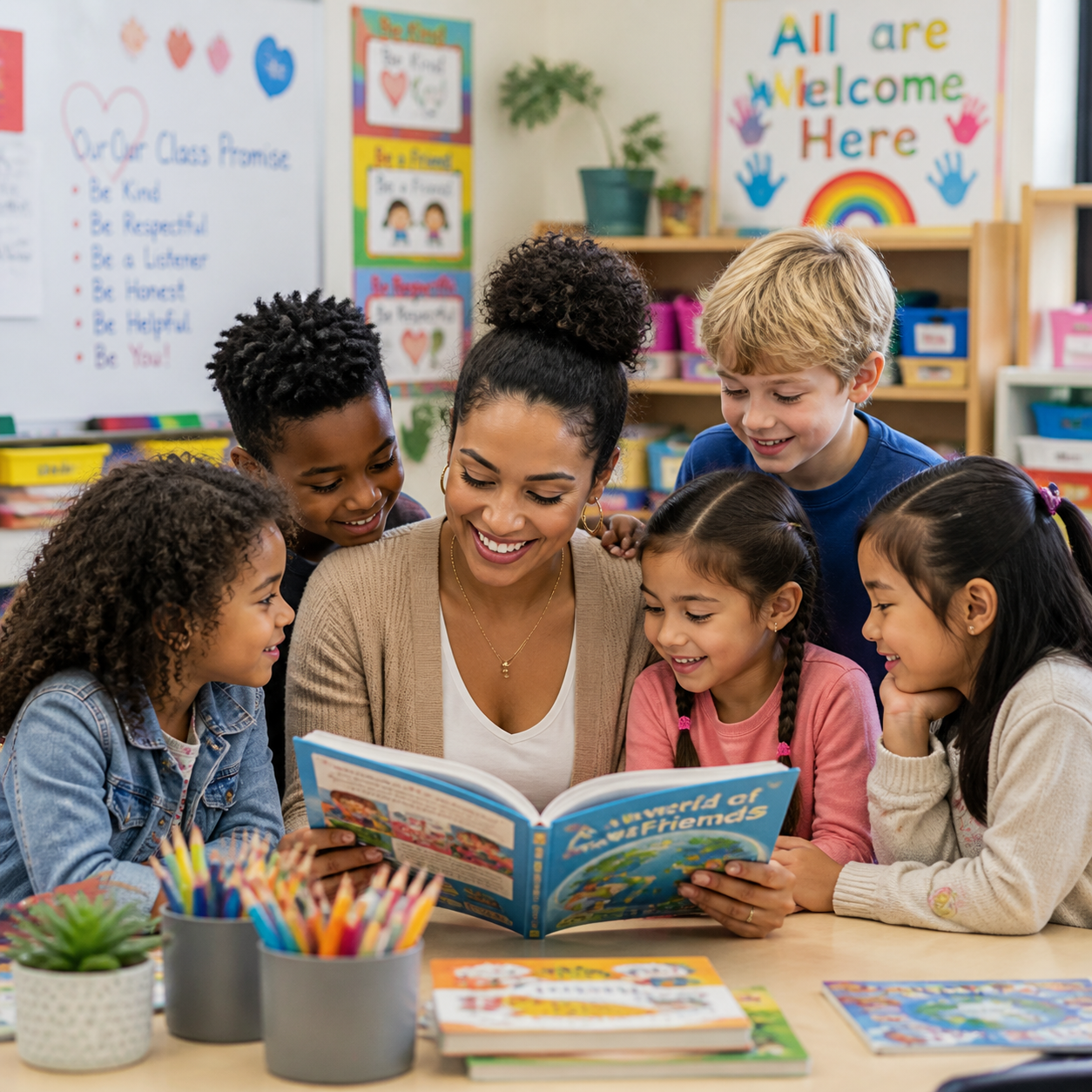
Schools are where children spend the majority of their waking hours. For many kids, a classroom is the most stable, predictable space in their day — and for some, it may be the only place where a caring adult pays close attention. That daily proximity gives schools a responsibility that goes far beyond academic instruction.
Why Schools Are a Critical Line of Defense Against Child Abuse
Schools are uniquely positioned to detect and prevent child abuse because they provide consistent, daily contact with children across months and years. No other institution outside the family sees a child as regularly or as closely.
A teacher who sees the same 25 children every morning notices when something shifts — a child who was talkative goes quiet, a student who was thriving starts flinching at raised voices, or a seven-year-old begins drawing scenes that don't match a seven-year-old's world. These signals are easy to miss in a single encounter. They become visible through relationship and routine.
This is why child abuse prevention programs increasingly treat schools not as passive bystanders but as active protective systems. When a school functions well — with trained staff, clear policies, and a culture of openness — it creates a natural early warning network that no hotline or government agency can fully replicate.
Recognizing the Signs: Training Educators to Identify Abuse
Effective abuse identification begins with trained educators who understand the physical, behavioral, and emotional indicators that something may be wrong. Recognition is the first step toward early intervention.
Physical signs — unexplained bruises, burns, or injuries inconsistent with a child's explanation — are the most obvious. But behavioral and emotional indicators are often more telling and more easily missed. These include sudden withdrawal, age-inappropriate sexual knowledge, extreme aggression, fear of going home, or persistent anxiety around specific adults.
Staff training should cover all three categories, and it should be repeated annually rather than delivered once during onboarding. Child abuse awareness is a skill that atrophies without reinforcement. Schools that invest in regular professional development on this topic report higher rates of appropriate referrals — not because abuse becomes more common, but because staff become more confident in what they're seeing.
Critically, training should also address trauma-informed education principles: understanding that a child displaying disruptive behavior may be responding to harm, not simply acting out. Reframing behavioral problems through a trauma lens prevents children from being punished for symptoms of abuse.
Mandatory Reporting: Legal and Ethical Responsibilities of School Staff
In most jurisdictions, school staff are mandatory reporters — meaning they are legally required to report reasonable suspicions of child abuse or neglect to child protection authorities. This obligation exists regardless of whether the school has confirmed that abuse occurred.
This distinction matters. Educators sometimes hesitate to report because they aren't certain, or because they fear damaging a family relationship. But mandatory reporting laws are specifically designed to remove that burden of proof from the individual teacher. The role of the school is to report the concern; the role of child protection services is to investigate it.
Schools need clear, written protocols that tell every staff member — from the principal to the lunchroom monitor — exactly what to do when they have a concern. Who do they tell first? What gets documented? When does a report go directly to authorities versus through internal channels? Ambiguity in these processes causes delays, and delays cost children time they don't have.
Many schools designate a child protection officer or designated safeguarding lead (DSL) to coordinate these processes. This person serves as the internal expert, the point of contact for staff with concerns, and the liaison to external agencies. Having a named, trained individual in this role significantly improves reporting consistency and follow-through.
Creating a Safe School Environment Through Policies and Culture
A safe school environment is built on both formal safeguarding policies and an informal culture where children feel heard. Policies set the floor; culture determines whether children actually use the door.
Strong safeguarding policies include codes of conduct for staff-student interactions (including digital communication), visitor protocols, supervision standards, and clear procedures for handling disclosures. These aren't bureaucratic exercises — they're the structural conditions that reduce opportunity for abuse and ensure accountability when something goes wrong.
But policy alone isn't enough. A child who has been told "tell a trusted adult" will only act on that instruction if they genuinely believe the adult will listen, take them seriously, and not make things worse. Schools build that belief through everyday behavior: how teachers respond when a student shares something difficult, whether children see adults follow through on concerns, and whether the school's general climate is one of respect and safety.
Schools that have worked to reduce bullying, for instance, often find that disclosures of home-based abuse also increase. When children experience a school as a place where their voices matter, they are more likely to use that voice about serious harm.
Prevention Programs and Resilience Training in the Classroom
Child abuse prevention programs delivered in classrooms give children the language, knowledge, and confidence to recognize unsafe situations and seek help. These programs work best when they begin early and build progressively across grade levels.
Body autonomy education — teaching children that their bodies belong to them, that they have the right to say no to unwanted touch, and that secrets about bodies should always be told to a trusted adult — is most effective when introduced in early childhood. Research consistently shows that children who receive this education are more likely to disclose abuse when it occurs and less likely to blame themselves.
Social-emotional learning (SEL) complements these programs by building the broader skills children need to navigate relationships safely: identifying emotions, setting boundaries, recognizing manipulation, and asking for help. SEL is not a standalone abuse prevention tool, but it creates the emotional vocabulary that makes abuse prevention lessons meaningful rather than abstract.
Resilience training takes this a step further. Rather than focusing only on risk, resilience-focused approaches build children's capacity to cope with adversity, maintain a sense of self-worth under stress, and recover from difficult experiences. Children with higher resilience are not immune to abuse, but they are better equipped to seek support and less likely to internalize harm as a personal failing. Schools that embed resilience training into the curriculum — not as a one-off lesson but as an ongoing thread — are investing in protective factors that last well beyond the school years.
Building Trusted Adult Relationships as a Protective Factor
One of the most powerful things a school can offer an at-risk child is a trusted adult relationship — a consistent, caring connection with someone who notices them, believes them, and advocates for them. Research on adverse childhood experiences (ACEs) consistently identifies this kind of relationship as a key buffer against long-term harm.
This doesn't require a school counselor or a formal mentorship program, though both help. It can be a homeroom teacher who checks in every morning, a coach who makes time to talk, or a librarian who remembers what a child is reading. What matters is consistency and genuine attention.
Schools can deliberately cultivate these relationships by reducing class sizes where possible, training staff in relationship-based approaches, and structuring the school day to include regular one-on-one or small-group time. Advisory programs — where a small group of students meets regularly with one adult — have shown particular promise in building the kind of connection that makes disclosure possible.
When a child does disclose abuse, the quality of that first response often determines whether they continue to seek help or withdraw. A trusted adult who responds with calm, belief, and clear action can change the trajectory of a child's experience entirely.
Partnering With Families and Communities for Comprehensive Protection
Schools cannot protect children alone, and the most effective child protection approaches treat schools as one node in a wider network that includes families, child protection services, healthcare providers, and community organizations.
Parent engagement is particularly important. When schools communicate openly with families about their safeguarding policies, body safety education, and reporting obligations, they build the trust needed for parents to raise concerns and share information. Some schools hold information evenings where parents can learn what their children are being taught about body autonomy — this transparency reduces anxiety and creates a consistent message between home and school.
Collaboration with child protection services requires more than a phone number on a wall. Schools that have established working relationships with local agencies — through joint training, shared protocols, and regular communication — respond more effectively when concerns arise. The handoff from school concern to formal investigation goes more smoothly when the two systems already know each other.
Community partnerships expand the school's reach further: social workers embedded in schools, after-school programs that extend safe supervision hours, and community health workers who can connect families to support before situations escalate. Child protection is a shared responsibility, and schools are most effective when they operate as part of that broader ecosystem rather than trying to carry the weight alone.
Frequently Asked Questions
What is a school's legal responsibility when child abuse is suspected?
In most countries, school staff are mandatory reporters, legally required to report reasonable suspicions of abuse to child protection authorities. Schools do not need to confirm that abuse occurred — suspicion alone triggers the obligation. Staff should follow their school's safeguarding protocol and report through the designated safeguarding lead or directly to authorities, depending on local law.
At what age should children start learning about body safety in school?
Body safety education can begin as early as age three or four, using age-appropriate language about body autonomy, private parts, and the difference between safe and unsafe touch. Programs like those recommended by child protection organizations build progressively, introducing more complex concepts around consent and manipulation as children grow.
How does resilience training help prevent or reduce the impact of abuse?
Resilience training builds the internal resources children need to recognize harm, seek help, and recover from adversity. Children with stronger resilience are more likely to disclose abuse, less likely to self-blame, and better able to maintain wellbeing despite difficult experiences. It works best as a long-term, embedded curriculum element rather than a single workshop.
What should a parent do if they believe a school has failed to act on abuse concerns?
Parents should first raise the concern directly with the school's designated safeguarding lead or principal in writing. If the response is unsatisfactory, they can escalate to the local education authority, child protection services, or the relevant regulatory body for schools in their jurisdiction. Documenting all communications is important throughout this process.
How can schools support a child who has disclosed abuse?
The immediate priority is to listen calmly, avoid asking leading questions, and reassure the child that they did the right thing by telling someone. Schools should follow their reporting protocol without delay, ensure the child has access to a trusted adult throughout the process, and coordinate with child protection services on any further support. Trauma-informed approaches — maintaining routine, offering choice where possible, and reducing unnecessary retelling — help protect the child's wellbeing during what is often a disorienting time.