Mandatory Reporting: Responsibilities and Procedures for Child-Protection Professionals
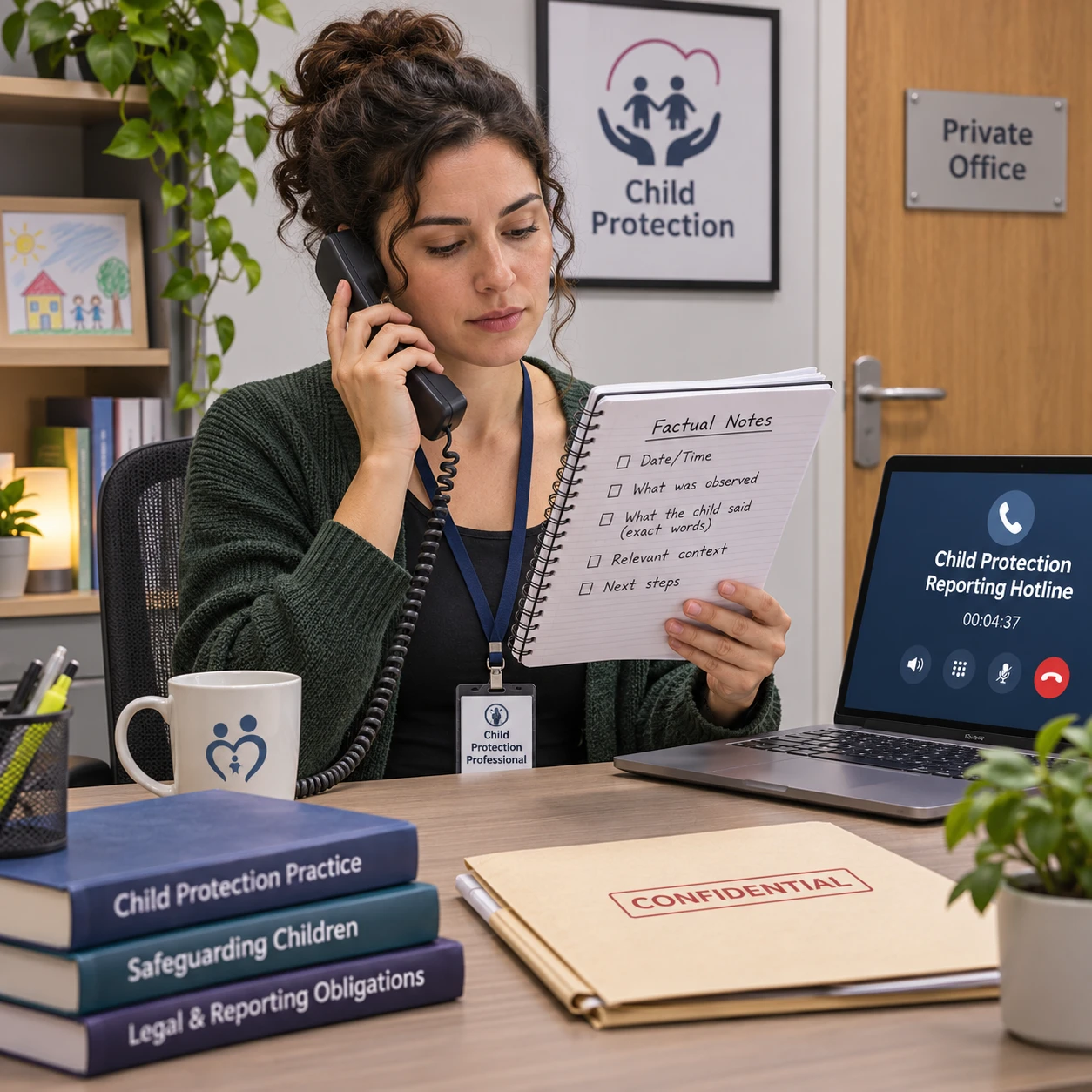
Mandatory reporting is a legal safeguard that helps connect children who may be experiencing abuse or neglect with protection and support. For professionals, the central task is to recognize a concern, understand the local reporting threshold, and act promptly through the correct channel. A report communicates a concern; it does not require the professional to prove what happened.
Rules differ across countries, states, provinces, and territories. Check current local law, agency policy, and official reporting instructions, especially when a child may face immediate harm.
What mandatory reporting means
Mandatory reporting is a legal duty requiring certain people to notify a designated authority when they suspect child abuse or neglect. The precise duty, reporting threshold, and process depend on the jurisdiction.
A mandatory reporter is someone whose role or professional relationship to children places them under a statutory duty to report. Depending on local law, the report may go to child protection services, a government reporting authority, police, or another designated agency. Some jurisdictions impose a duty on all adults, while others specify particular occupations.
The purpose is to alert the authority responsible for assessing safety and deciding what response is appropriate. Reporting is not the same as making a finding of abuse, conducting an investigation, or deciding whether a family should receive services. Those decisions belong to the relevant authority.
Because laws and procedures change, do not rely on a general guide to determine whether a specific legal duty applies. Confirm the rules where the child is located and follow any required procedure. Agency guidance can help, but it does not replace an individual reporting obligation where the law places one on the professional.
Who may be required to report
People who work with children or families are commonly designated as mandatory reporters, but covered roles vary by jurisdiction. Check the applicable law and reporting authority rather than assuming your job title is included or excluded.
Commonly covered professionals may include:
- Teachers, school administrators, counselors, and other school staff
- Physicians, nurses, psychologists, social workers, and other health or behavioral-health professionals
- Childcare providers, early-learning staff, and youth-program workers
- Law enforcement officers, clergy, and staff in residential or community services, where local law includes them
Some laws define reporters by occupation; others may apply to volunteers, contractors, or any person who learns of suspected harm. The law may also specify whether the person who observes or receives the information must report directly, even when a supervisor or colleague is involved.
When uncertain, consult the official child protection authority or a qualified legal adviser promptly. A supervisor can help clarify workplace steps, but waiting for internal approval may be unsafe or inconsistent with the law. Follow the required reporting channel and any applicable deadline.
What concerns may need to be reported
A report may be required when a professional has reasonable suspicion that a child has experienced, or may be at risk of, abuse or neglect. The threshold is generally suspicion rather than proof, but its exact legal definition varies by jurisdiction.
Child abuse and neglect can include physical abuse, sexual abuse, emotional or psychological harm, and failure to provide necessary care or supervision. Local definitions differ, and some laws address specific circumstances separately. A professional should use the jurisdiction’s definitions and reporting guidance rather than trying to make a legal finding independently.
Reasonable suspicion may arise from a child’s disclosure, an observed injury or behavior, information from another person, or a pattern of concerns. One detail may seem uncertain in isolation; context and repeated observations can matter. Avoid treating stereotypes, assumptions about a family, or a single unexplained behavior as proof. Record what was actually said or observed and report when the applicable threshold is met.
You do not need to establish that abuse occurred. Your role is to share relevant concerns with the authority so it can assess them. If you are unsure whether the threshold is met, promptly seek guidance from the designated reporting authority, while taking care not to delay a report required by law.
How to make a report
To make a report, contact the child protection reporting hotline or authority designated for the child’s location, provide clear factual information, and follow the jurisdiction’s required method and timing. If you cannot identify the right channel, use an official government source or ask the relevant authority for direction.
- Check the correct authority. Use current official instructions for the area where the child is located. Some situations require contacting more than one agency; follow local guidance.
- Act within the required timeframe. Laws may require an immediate call, a written form, or both. Do not assume that an email, internal form, or message to a supervisor counts as an official report.
- Share relevant facts. Give the child’s identifying and location information if known, describe the concern, and distinguish direct observations from what someone else told you. Include dates, context, and any known immediate safety issue.
- Answer questions accurately. If a detail is unknown, say so. Do not guess, embellish, or present an inference as a fact.
- Follow instructions and record the contact. Note when and how you reported, the authority or recipient, any reference number, and instructions received, subject to applicable privacy rules.
Share only information relevant to the concern, using a secure channel and following privacy and record-handling requirements. If the authority asks for follow-up information, respond through the approved process. Reporting is the start of an assessment, not a guarantee of a particular outcome.
Documentation, confidentiality, and follow-up
Document concerns promptly, objectively, and securely, and share information only with people or authorities who are authorized to receive it. Confidentiality matters, but it does not automatically prevent a report required by law.
A useful record separates observation, disclosure, and interpretation. For example, write the child’s words as accurately as possible, identify who was present, and describe visible behavior or injury without diagnosing its cause. Record dates, times, actions taken, and report details. Avoid leading questions or repeated interviews that could distress the child or interfere with a formal assessment.
Keep records in the approved system and limit access according to law and workplace policy. Do not promise a child that you can keep the information secret; explain in age-appropriate language that you may need to tell people whose role is to help keep them safe. Tell caregivers only when permitted and appropriate, and consider whether doing so could increase risk or affect an investigation. Seek direction from the responsible authority where necessary.
After reporting, cooperate with lawful follow-up requests and continue to document new relevant observations. Do not assume that a report ends your responsibility to act if further concerns arise. Local rules govern reporter identity, confidentiality, records access, and protections for people who report in good faith.
Responding to immediate danger
If a child faces immediate risk of harm, contact local emergency services or police as appropriate, as well as making any required child protection report. An urgent safety response should not wait for routine paperwork or an internal meeting.
Follow your workplace emergency procedures, keep the child in a safe setting when you can do so without creating additional risk, and share the child’s location and the nature of the immediate danger with responders. Do not confront a suspected person or attempt to remove a child yourself unless authorized and necessary under local procedures.
Emergency services and child protection services may have different roles. Contacting one does not necessarily satisfy a separate duty to report to the other. Confirm local requirements, document each contact, and follow instructions from the responding authorities.
Common mistakes and how to avoid them
Professionals can reduce reporting errors by acting on the legal threshold, using the designated channel, and keeping their role focused on safety and accurate information. These common mistakes can delay a child protection response.
- Waiting for proof. People may hesitate because they cannot verify a child’s account. But a reporter’s role is usually to report reasonable suspicion, not investigate or prove abuse. Check the local threshold and report promptly when it is met.
- Investigating independently. Repeated or leading questions can distress a child and complicate assessment. Listen calmly, ask only what is needed to understand immediate safety, document the child’s words, and leave formal fact-finding to trained authorities.
- Assuming someone else reported. A colleague’s intention or a supervisor’s awareness may not fulfill your personal duty. Confirm who made the official report and whether the law requires you to report directly; do not let uncertainty create a delay.
- Relying only on internal procedures. A workplace form or consultation may support the process but may not count as a report to the designated authority. Verify the official channel and complete any separate reporting step required by law.
Frequently asked questions
What level of certainty is needed before making a report?
In many jurisdictions, reasonable suspicion is enough; professionals do not need to prove abuse or neglect. The precise threshold varies, so check local law and report when the applicable standard is met.
Does a professional need to tell a supervisor before reporting?
That depends on local law and workplace policy. A supervisor may provide support, but internal approval should not delay or replace a report required from you personally.
Can a report be made anonymously?
Rules differ. Some authorities accept anonymous reports, while some laws require the reporter to identify themselves or provide contact information. Ask the local authority and do not assume anonymity removes other reporting duties.
What should be included in a report?
Provide the information requested by the authority, such as the child’s identity and location if known, what raised concern, when it occurred, who provided the information, and whether there is immediate danger. Separate what you observed from what you were told, and identify unknown details honestly.
What should a professional do if a child is in immediate danger?
Contact local emergency services or police as appropriate, then make any required child protection report. Follow emergency instructions and document the contacts and actions taken.